Every job below is one we do ourselves across Roseville.
We draw up the layout based on your yard's slope, your house's door and window placement, and how you actually plan to use the space. That includes sizing footings for the load, picking a board pattern, and working out stair placement before any lumber gets ordered. Drawings go to the county for permit review, so there are no surprises once the crew shows up.
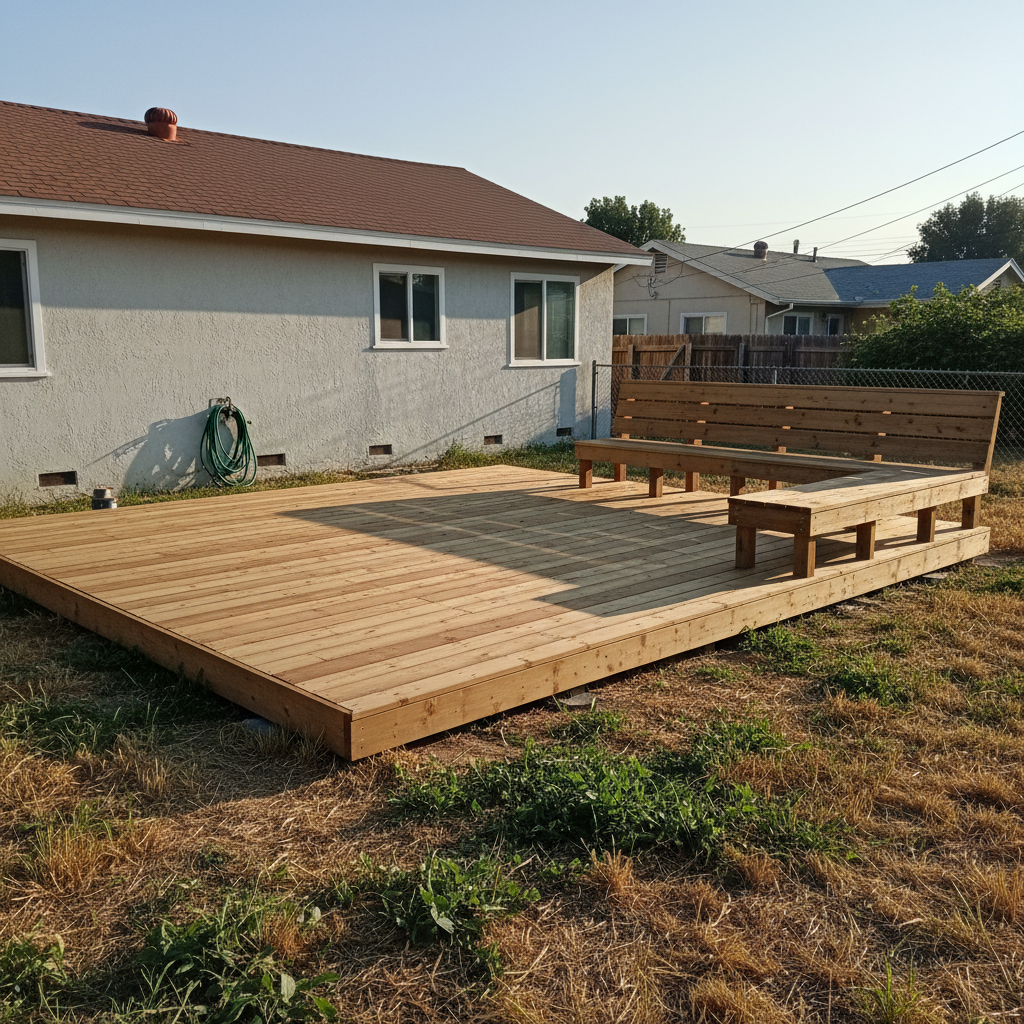
New decks get built on concrete footings poured below grade, with posts set on post bases rather than buried in the ground where they'd rot. We frame with pressure-treated joists on 16-inch centers, bolt the ledger to the house with flashing underneath, and deck over the top in whatever board you've picked. Most single-level decks take one to two weeks depending on size and whether the weather cooperates.
We fix the common failure points: rotted ledger boards, loose joist hangers, posts that have started to lean, and stair stringers that have split. Sometimes a deck looks fine on top but the framing underneath has gone soft, and that's the part that actually matters for safety. We only replace what's bad, not the whole structure, unless the rot's spread further than it looks from above.
Wood decks in this valley take a beating from UV in summer and standing water in winter rain, so a stain and sealer schedule matters more here than in milder climates. We pressure wash, let the wood dry fully, then apply a semi-transparent or solid stain depending on how much of the grain you want to keep showing. Plan on resealing every two to three years for a wood deck that sits in full sun most of the day.
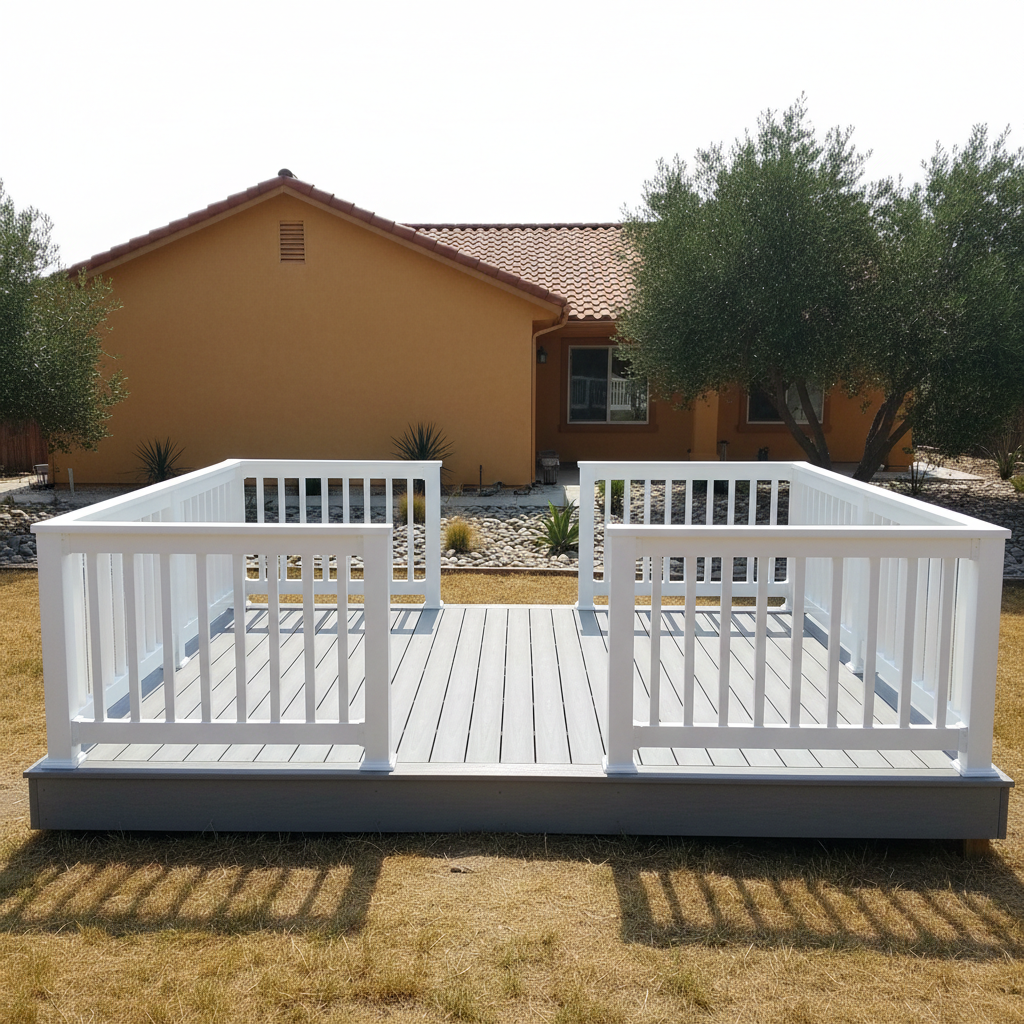
Composite boards skip the staining step entirely and won't splinter, which is why a lot of homeowners switch over when they replace an old wood deck. We leave the manufacturer's recommended gap between boards for expansion, since composite moves more than people expect in our summer heat. Framing underneath still has to meet the same structural code as a wood deck, composite or not.
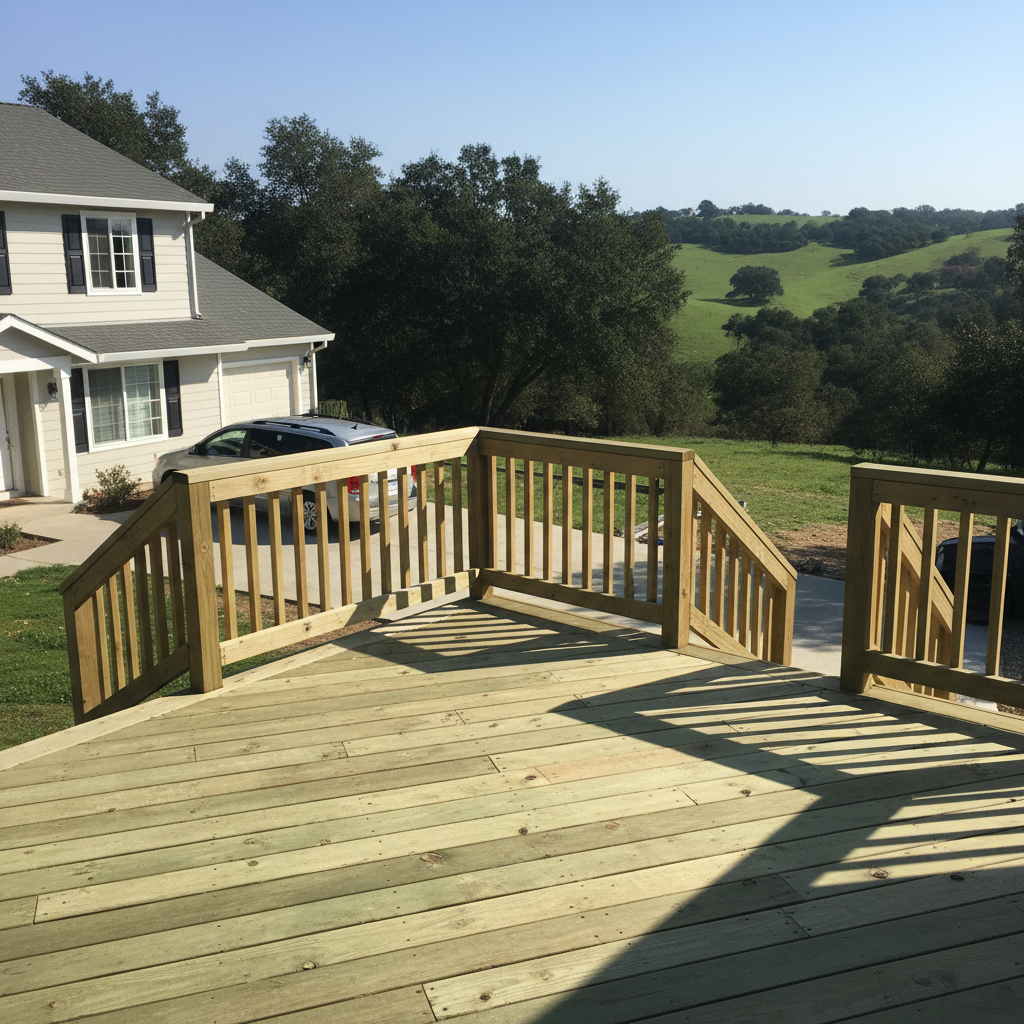
Railings have to hit 36 inches for most residential decks, or 42 inches for some stair configurations, and balusters can't let a 4-inch sphere pass through. We build railings in wood, cable, or metal baluster systems, and we check the spacing against code before it ever gets inspected. A railing that looks fine from the yard can still fail an inspection over baluster gaps, so we measure it before the inspector does.
If the frame underneath is still solid but the boards have cupped, splintered, or gone gray, we can pull the decking and replace just the surface. It's a faster, cheaper option than a full rebuild when the joists and ledger check out sound. We'll tell you straight if the framing isn't up to it, because resurfacing over bad joists just moves the problem a year down the road.
Sloped lots around the Roseville foothills often work better with a deck that steps down in two or three levels instead of one tall structure on long posts. That means more footings, more beams, and stair runs between levels, so the engineering accounts for more load paths than a single flat deck. We've built them on grades that would've been a mess of stairs and retaining walls otherwise.
Old decks, especially ones built decades ago without proper flashing, usually have hidden rot by the time they come down. We haul off the old lumber, check what shape the rim joist and siding are in underneath, and flag anything that requires fixing before new framing goes up.
A pergola or shade structure over part of the deck cuts down on direct sun during the hottest part of the day, which matters a lot here from June through September. We tie the posts into the existing deck framing where it's rated to take the extra load, or add footings of its own where it isn't.
Four steps, and no surprises in any of them.
You tell us what you want doing, we look at what is actually there, and we ask the awkward questions early.
In writing, itemised, free. If something might add cost later we flag it now rather than at the end.
Same crew throughout. We cover your floors, keep the dust down and tidy up before we leave each day.
You point out anything you are not happy with and we fix it before the invoice, not after.
These are the areas we typically drive to for deck projects.
Questions that come up once a deck project is actually underway.
Describe the problem and we will tell you what it probably is. No obligation.